Brand Consistency vs. Repetition: How to Build a Flexible Brand System
Brand consistency doesn’t mean making everything look the same. It means people recognize your brand even when the layout, format or message changes.
Every few years, design is declared finished. A new tool arrives, production becomes faster, and the conclusion follows almost automatically: if more people can make the thing, perhaps the designer is no longer necessary.
Every few years, design is declared finished. A new tool arrives, production becomes faster, and the conclusion follows almost automatically: if more people can make the thing, perhaps the designer is no longer necessary.
We have heard versions of this argument before. Desktop publishing was going to make professional layout obsolete. Stock libraries were going to eliminate the need for original imagery. Templates were going to make identity systems available to everyone. Now generative AI can produce polished images in seconds, and the same prediction has returned with new urgency.
The prediction usually confuses two different things: making an output and making a decision. Tools can transform the first. They have never removed the need for the second.
For much of the twentieth century, preparing a printed page was physical work. Type arrived in columns. Images were sized separately. Layout artists cut, positioned and pasted elements onto boards that would be photographed for printing. Changes could mean lifting an element, resetting type or rebuilding part of the page.
That process demanded craft, patience and an intimate understanding of production. It also placed technical limits around who could execute the work. When the Macintosh, PageMaker, the LaserWriter and PostScript converged in the mid-1980s, many of those separate steps moved onto one desktop. A single person could compose type and image on screen and send a far more resolved file to print.
The labour changed dramatically. The need to decide what a page should communicate did not.
Desktop publishing democratized production. It also produced a flood of visibly “desktop-published” work: crowded pages, decorative type used because it was available, and layouts governed by software defaults rather than an idea. Access to more fonts did not create typographic judgment. Moving an object with a mouse did not explain where it belonged.
Designers adapted by shifting their attention. Less time was spent on mechanical assembly; more could be spent testing hierarchy, refining systems and understanding how a message behaved across formats. The profession’s value has never depended on how difficult its tools are to master. It has endured and evolved because its real value lies elsewhere: in the judgment required to use those tools with purpose.
The next major shifts did not begin with a blank page. Stock photography, icon libraries, website themes and presentation templates gave everyone a head start. They solved real problems: tighter budgets, shorter timelines and the need to produce at scale.
They also made sameness easier. When thousands of brands draw from the same visual ingredients, the question is no longer whether an image is attractive. The question is whether it belongs to this brand, in this context, for this audience—and whether the entire system can remain coherent after the first application.
A template can organize a page. It cannot determine what deserves emphasis. A library can supply an image. It cannot know whether that image strengthens or weakens the meaning of the brand.
Generative AI compresses the distance between an intention and a visible option. It can help a team explore, visualize and challenge an early direction. It can also generate a convincing answer before the right question has been asked.
That is why the conversation becomes more interesting after the image appears. What references shaped it? Which conventions did the model reproduce? What has been simplified, exaggerated or erased? Can the idea survive packaging constraints, accessibility requirements, multiple languages, production realities and years of use? Who is prepared to explain the choice—and take responsibility when it fails?
These are not software questions. They are design questions.
Paste-up demanded manual precision. Desktop software centralized production. Stock and templates accelerated assembly. AI now accelerates generation. Each shift changes where time is spent and which skills remain scarce.
What remains scarce is judgment: the ability to read context, distinguish a useful idea from a merely impressive one, connect individual choices into a system, and decide what should not be made. That judgment is built through observation, experience, discussion and accountability.
The designer’s role is not to defend old tools. It is to use new ones without surrendering authorship to them.
Is AI replacing graphic designers?AI is already changing production and some categories of execution. But brand and communication work still require decisions about meaning, audience, coherence, feasibility and responsibility. The role is changing; it is not reducible to generating an image.
Does using templates make a design less original?Not automatically. A template can be an efficient structure. The result becomes generic when the structure substitutes for a point of view, or when brand-specific decisions are never made.What is the designer responsible for when AI is involved?The designer remains responsible for direction, references, selection, editing, integration, production suitability and the effect of the final work. A tool can propose; it cannot accept responsibility.
What should a company look for in a creative partner today?Look beyond software proficiency. A strong partner can explain the reasoning behind a choice, connect it to business and audience needs, and build a system that performs beyond one polished image.
Design has survived every tool that was supposed to replace it because design was never simply the production step. The tools will keep changing. The responsibility to decide with clarity and intention remains human.
Which tool most changed the way you work—and what could it never decide for you?
Explore more Grafico Insights or contact Grafico to discuss your next brand, packaging or digital project.
Brand consistency doesn’t mean making everything look the same. It means people recognize your brand even when the layout, format or message changes.
After nearly 30 years in business, one thing has become obvious to us.
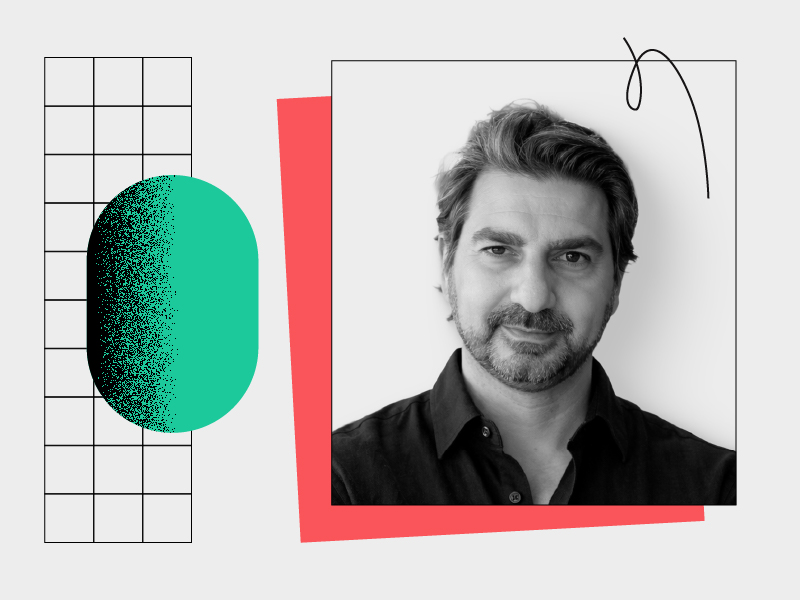
After nearly 30 years of building brands, Tony Moriello has developed a vision of branding that runs counter to several industry trends.